


 Tanuja Kathait
 Swati Raj


Artificial Intelligence in Agriculture: Future of Farming
Agriculture has always been the backbone of India’s economy. Millions of farmers across the country depend on farming for their livelihood. But today, agriculture is facing many challenges such as climate change, unpredictable rainfall, rising production costs, labor shortages, pest attacks, and declining soil fertility.
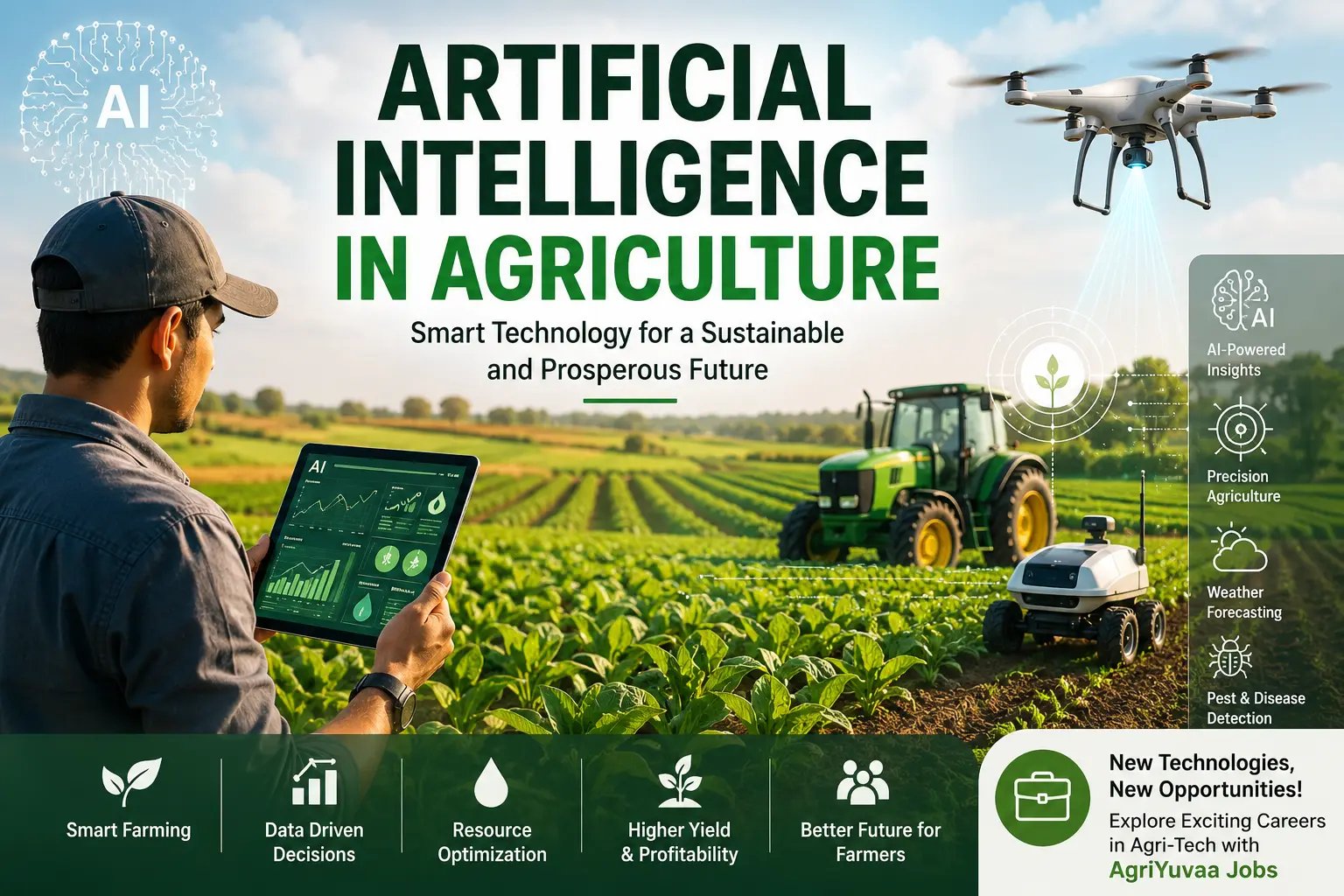
To solve these challenges, technology is entering the agricultural sector at a rapid speed. One of the most powerful technologies changing the future of farming is artificial intelligence in agriculture.
From detecting crop diseases to predicting weather conditions and improving crop yield, Artificial Intelligence (AI) is helping farmers make smarter decisions. In recent years, the growth of AI in India has opened new opportunities for farmers, agritech startups, researchers, and agriculture students.
In this blog, we will understand the use of AI in agriculture, its applications, advantages, challenges, future scope, and why it is becoming one of the most important technologies in modern farming.
What is Artificial Intelligence in Agriculture?
Artificial intelligence in agriculture refers to the use of advanced technologies such as machine learning, computer vision, robotics, and data analysis to improve farming practices.
In simple words, AI helps machines think, analyze, and make decisions like humans. In agriculture, AI systems collect information from:
- Drones
- Sensors
- Satellites
- Smartphones
- Cameras
- Weather stations
- Farm machinery
The collected data is analyzed to help farmers make better decisions related to:
- Crop health
- Irrigation
- Fertilizer use
- Pest control
- Harvesting
- Soil management
AI-powered farming is also known as smart farming or precision agriculture.
Why is AI Important in Agriculture?
India’s population is continuously increasing, and the demand for food production is also rising. At the same time, farmers are struggling with limited resources such as water, land, and labor.
This is where AI becomes extremely important.
Artificial intelligence can help farmers:
- Increase productivity
- Reduce crop losses
- Save water
- Minimize fertilizer wastage
- Improve decision-making
- Reduce farming costs
- Predict diseases and weather conditions
The use of AI in agriculture is helping farmers shift from traditional farming methods to data-driven smart farming.
Growth of AI in India’s Agriculture Sector
India is rapidly adopting AI technologies across multiple industries, including agriculture.
The government, private companies, and agritech startups are investing heavily in AI-based farming solutions. Many Indian startups are developing applications that help farmers monitor crops, identify diseases, and improve yield.
Some major factors driving the growth of AI in India include:
- Increasing smartphone usage among farmers
- Affordable internet access
- Government support for digital agriculture
- Rising agritech startups
- Availability of satellite and weather data
- Growing awareness about smart farming
Today, many farmers in India use mobile applications for:
- Weather forecasting
- Market price analysis
- Pest detection
- Soil testing
- Crop recommendations
AI is no longer limited to large farms. Even small and medium farmers are slowly adopting AI-powered technologies.
Use of AI in Agriculture
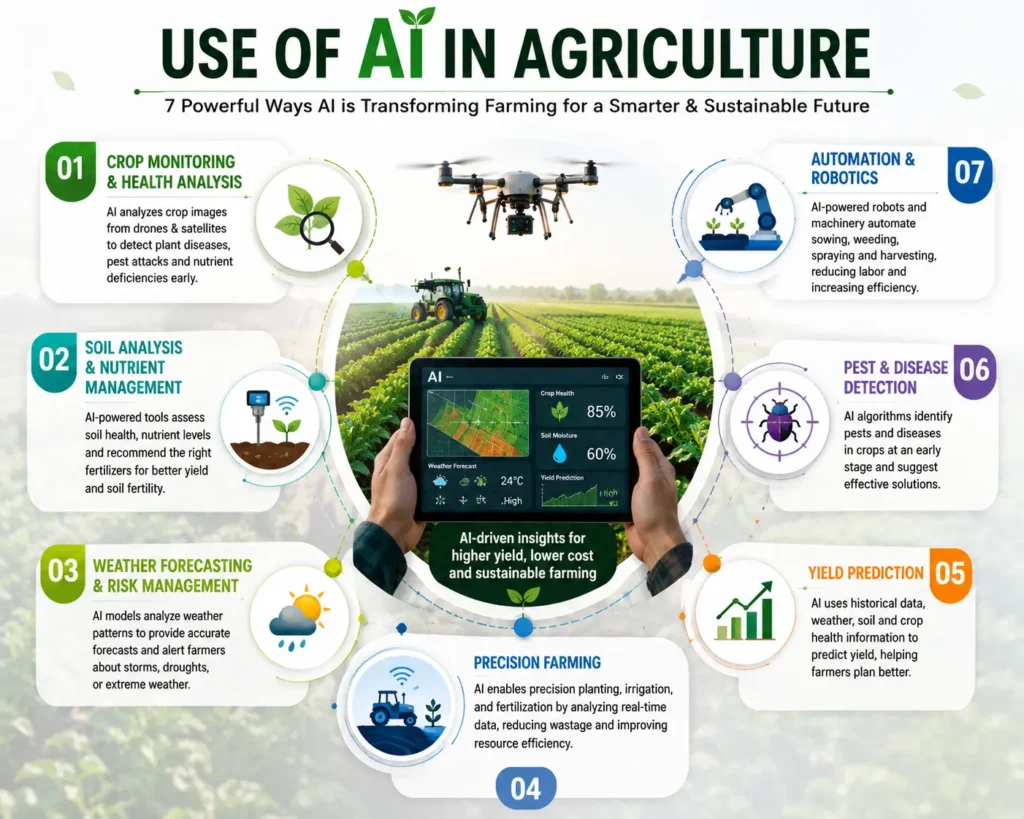
There are many applications of artificial intelligence in farming. Let us explore some of the most important uses of AI in agriculture.
- Crop Monitoring and Disease Detection
One of the most common uses of AI in agriculture is crop monitoring.
AI-powered cameras and drones can monitor crop health in real time. These systems analyze plant color, leaf condition, and growth patterns to identify diseases or nutrient deficiencies.
For example, if a crop shows signs of fungal infection, the AI system can detect it early and alert the farmer.
Benefits include:
- Early disease detection
- Reduced crop damage
- Lower pesticide use
- Improved crop quality
This helps farmers take quick action before the disease spreads.
- Smart Irrigation Systems
Water scarcity is becoming a serious issue in agriculture.
AI-based irrigation systems use sensors and weather data to determine the exact amount of water needed by crops.
Instead of overwatering or underwatering, farmers can provide the right amount of water at the right time.
Advantages of AI-based irrigation:
- Water conservation
- Lower electricity usage
- Improved crop growth
- Reduced irrigation costs
This technology is especially useful in drought-prone regions of India.
- Weather Prediction
Weather plays a major role in farming success.
AI systems analyze historical weather data, satellite images, humidity, rainfall patterns, and temperature to provide accurate weather predictions.
Farmers can use these predictions to:
- Plan sowing
- Schedule irrigation
- Avoid crop damage
- Prepare for heavy rainfall or drought
Accurate weather forecasting reduces farming risks significantly.
- Precision Farming
Precision farming is one of the most advanced applications of artificial intelligence in agriculture.
In precision farming, AI technologies analyze data from sensors, drones, GPS systems, and satellites to manage farms more efficiently.
Farmers can identify:
- Soil health
- Nutrient levels
- Pest attacks
- Moisture conditions
- Crop growth patterns
This allows farmers to apply fertilizers, pesticides, and water only where needed.
As a result:
- Input costs decrease
- Productivity increases
- Soil health improves
- Environmental impact reduces
- AI-Powered Drones
Drones are becoming increasingly popular in Indian agriculture.
AI-powered drones can:
- Spray pesticides
- Monitor crop growth
- Capture field images
- Detect diseases
- Measure crop health
Drones save time and reduce manual labor.In large farms, drones help farmers monitor huge areas quickly and efficiently.
- Automated Harvesting
Labor shortages are a major challenge in agriculture. AI-based robots and machines are now being used for harvesting fruits and vegetables. These smart machines can identify ripe crops and harvest them carefully without damaging the produce. Although this technology is still developing in India, it has huge future potential.
- Soil Health Analysis
Healthy soil is essential for good crop production.
AI systems analyze soil data to determine:
- Nutrient levels
- Soil moisture
- Soil fertility
- pH levels
Based on this information, farmers receive recommendations about:
- Fertilizer application
- Crop selection
- Soil improvement techniques
This helps improve long-term soil productivity
Benefits of AI in Agriculture
The benefits of AI in agriculture are transforming farming across the world.
Let us look at some major advantages.
- Increased Crop Productivity
AI technologies help farmers monitor crops more efficiently, resulting in better yields.With proper irrigation, disease management, and nutrient monitoring, productivity increases significantly.
- Reduced Farming Costs
AI reduces unnecessary use of:
- Water
- Fertilizers
- Pesticides
- Labor
This lowers overall farming expenses.
- Better Decision-Making
AI systems provide real-time data and recommendations. Farmers can make informed decisions based on scientific analysis instead of guesswork.
- Water Conservation
Smart irrigation systems prevent water wastage. This is extremely important in regions facing water shortages.
- Early Pest and Disease Detection
AI can identify crop diseases before they spread. Early treatment reduces crop losses and improves quality.
- Improved Soil Health
AI helps maintain proper nutrient balance in the soil. This promotes sustainable agriculture.
- Reduced Environmental Impact
Precision farming reduces excessive chemical use. This protects soil, water, and the environment.
- Increased Farmer Income
Higher productivity and reduced losses help improve farmers’ profits. This is one of the biggest benefits of AI in agriculture.
Challenges of Artificial Intelligence in Agriculture
Despite its advantages, AI adoption in agriculture still faces several challenges.
- High Initial Investment
AI tools, drones, sensors, and smart machinery can be expensive for small farmers. Many farmers cannot afford advanced technologies.
- Lack of Technical Knowledge
Many farmers are not familiar with AI technologies. Training and awareness programs are needed.
- Poor Internet Connectivity
AI systems often depend on internet access. In rural areas, weak connectivity can limit technology adoption.
- Data Privacy Concerns
Farm data collected through AI systems must be protected properly. Data misuse can become a concern.
- Limited Awareness
Many farmers are still unaware of the practical use of AI in agriculture. Educational programs and demonstrations are necessary.
Real-Life Examples of AI in Indian Agriculture
India is already witnessing several successful AI applications in farming.
Microsoft AI for Farmers
Microsoft developed AI solutions that help farmers predict crop yield and improve productivity. The technology uses weather data and machine learning to provide recommendations.
CropIn Technology
CropIn is an Indian agritech company using AI and data analytics to improve farm management.
The company helps farmers with:
- Crop monitoring
- Disease prediction
- Yield forecasting
- Farm management
Mahindra’s Smart Farming Solutions
Mahindra has introduced smart farming technologies powered by AI and IoT. These technologies support precision farming and farm automation.
Government Initiatives
The Indian government is promoting digital agriculture through:
- Digital farming missions
- Drone subsidies
- Agritech innovation programs
- Smart agriculture initiatives
These efforts are accelerating the growth of AI in India’s agricultural sector.
Career Opportunities in AI and Agriculture
The rise of artificial intelligence in agriculture is creating exciting career opportunities for students.
Agriculture students can explore careers in:
- Agritech companies
- Precision farming
- Drone technology
- Data analysis
- AI-based farm management
- Agricultural robotics
- Smart irrigation systems
- Agricultural research
Some popular job roles include:
- Agritech Analyst
- Precision Farming Specialist
- Agricultural Data Analyst
- Drone Operator
- AI Research Assistant
- Smart Farming Consultant
- Agricultural Engineer
Students with knowledge of both agriculture and technology will have excellent career opportunities in the future.
Recently I wrote a blog on career opportunities in agriculture. Click on the link .
Future of Artificial Intelligence in Agriculture
The future of AI-powered farming looks extremely promising.
In the coming years, AI technologies may become common in Indian agriculture.
Future advancements may include:
- Fully automated tractors
- AI-powered robots
- Advanced weather prediction systems
- Smart greenhouses
- Real-time farm monitoring
- Autonomous harvesting machines
As technology becomes more affordable, more farmers will adopt AI solutions.
The integration of AI with:
- Internet of Things (IoT)
- Robotics
- Satellite imaging
- Blockchain
- Big data
will further transform agriculture.
Artificial intelligence is expected to play a major role in ensuring food security and sustainable farming in the future.
How Students Can Prepare for the Future of AI in Agriculture
If you are an agriculture student, this is the right time to learn about smart farming technologies.
Here are some skills students should develop:
- Digital agriculture knowledge
- Drone operation
- Data analysis
- GIS and remote sensing
- Precision farming concepts
- Basic AI understanding
- Agritech tools and applications
Students can also:
- Attend agritech workshops
- Participate in internships
- Learn online certification courses
- Follow agritech startups
- Explore research projects
Combining agriculture knowledge with technology skills can create strong career opportunities.
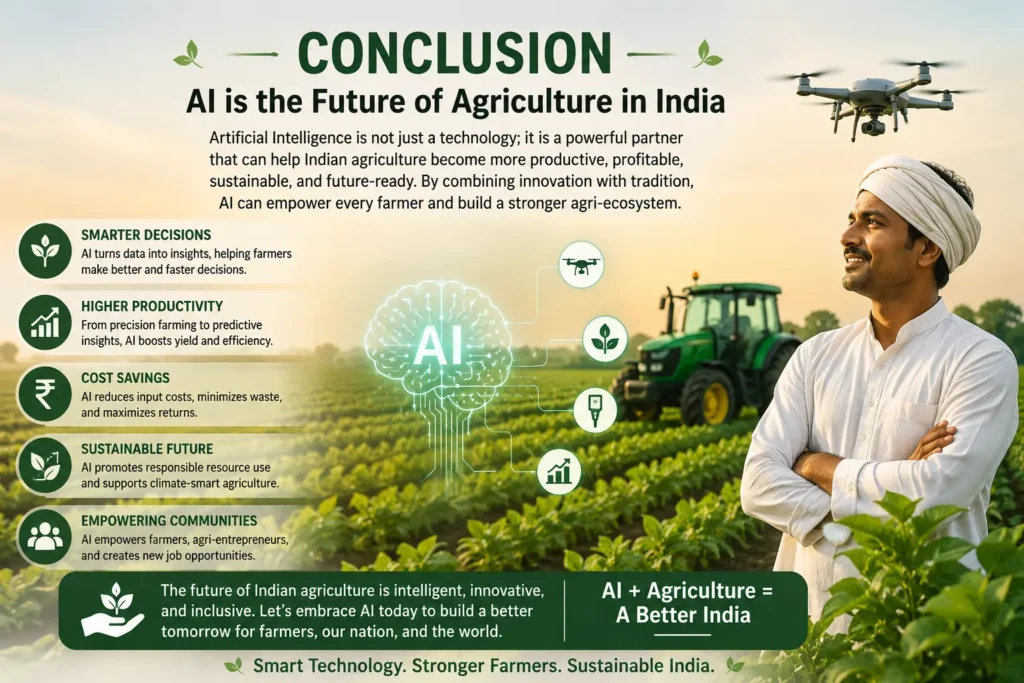
Why AI is the Future of Indian Agriculture
India needs sustainable and efficient farming systems to feed its growing population.
Traditional farming methods alone may not be enough to handle future agricultural challenges.
Artificial intelligence provides:
- Smart solutions
- Accurate predictions
- Resource optimization
- Better productivity
- Sustainable farming practices
AI is helping agriculture become more scientific, efficient, and profitable.
With continuous innovation and government support, India has the potential to become a global leader in AI-powered agriculture.
Conclusion
Artificial intelligence in agriculture is transforming the way farming is done across the world. From smart irrigation and disease detection to drones and precision farming, AI technologies are helping farmers increase productivity and reduce losses.
The growth of AI in India is opening new opportunities for farmers, agritech companies, and agriculture students. The use of AI in agriculture is not only improving crop production but also promoting sustainable farming practices.
Although challenges such as high costs and limited awareness still exist, the future of AI-powered farming looks bright.
For agriculture students and young professionals, learning about artificial intelligence can open doors to exciting career opportunities in the agritech industry.
As technology continues to evolve, artificial intelligence will become one of the most important tools for the future of Indian agriculture.
Explore More Agriculture Career Opportunities
Interested in agriculture careers, agritech jobs, internships, and industry updates?
Visit AgriYuvaa Jobs to explore the latest opportunities in agriculture, agribusiness, and smart farming technologies.
Stay ahead in the agri world 🌾
Follow us for agriculture job openings, internships, and career opportunities!
About the Author





2 thoughts on “Artificial Intelligence in Agriculture: Future of Farming”